Union Army veterans founded the Grand Army
of the Republic (GAR) in Decatur, Illinois in 1866 with the aims of encouraging
camaraderie among
former soldiers, honoring those who died to preserve the Union and to provide
care for veterans and their dependents. The organization grew rapidly as
Union
veterans moved into their late adult years. By 1890, the GAR had a membership
of more than 450,000. This organization amassed considerable power and was
generally
supported by Republicans since that party strongly pursued the Civil War, while
the Democratic Party generally opposed the war. Member of the GAR were, from time to time, an important voting block. Five Republican presidents,
I believe, were members of the GAR. Memorial Day is one achievement of the
GAR since they called for the first one—May 30, 1868—and
subsequently promoted this remembrance of the soldiers who fell saving the
Union. The GAR
lobbied effectively for benefits for handicapped veterans and then, later,
pensions and health care for all Union veterans in their old age. Their
success in obtaining 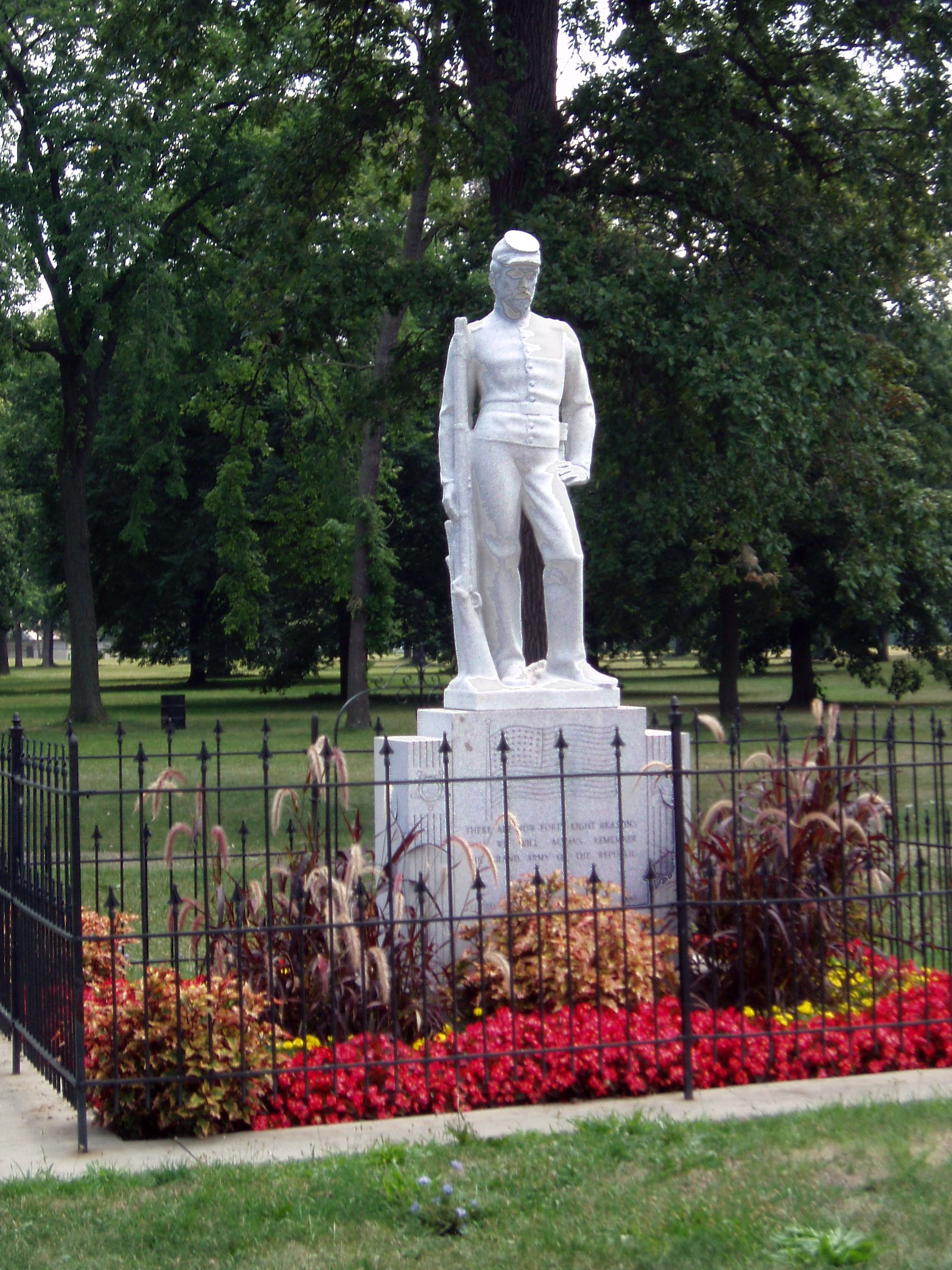 federal support for the older population set a precedent for the Social Security
legislation enacted in the Roosevelt Administration in 1935 and the Medicare
legislation enacted in Lyndon Johnson’s Administration.
federal support for the older population set a precedent for the Social Security
legislation enacted in the Roosevelt Administration in 1935 and the Medicare
legislation enacted in Lyndon Johnson’s Administration.
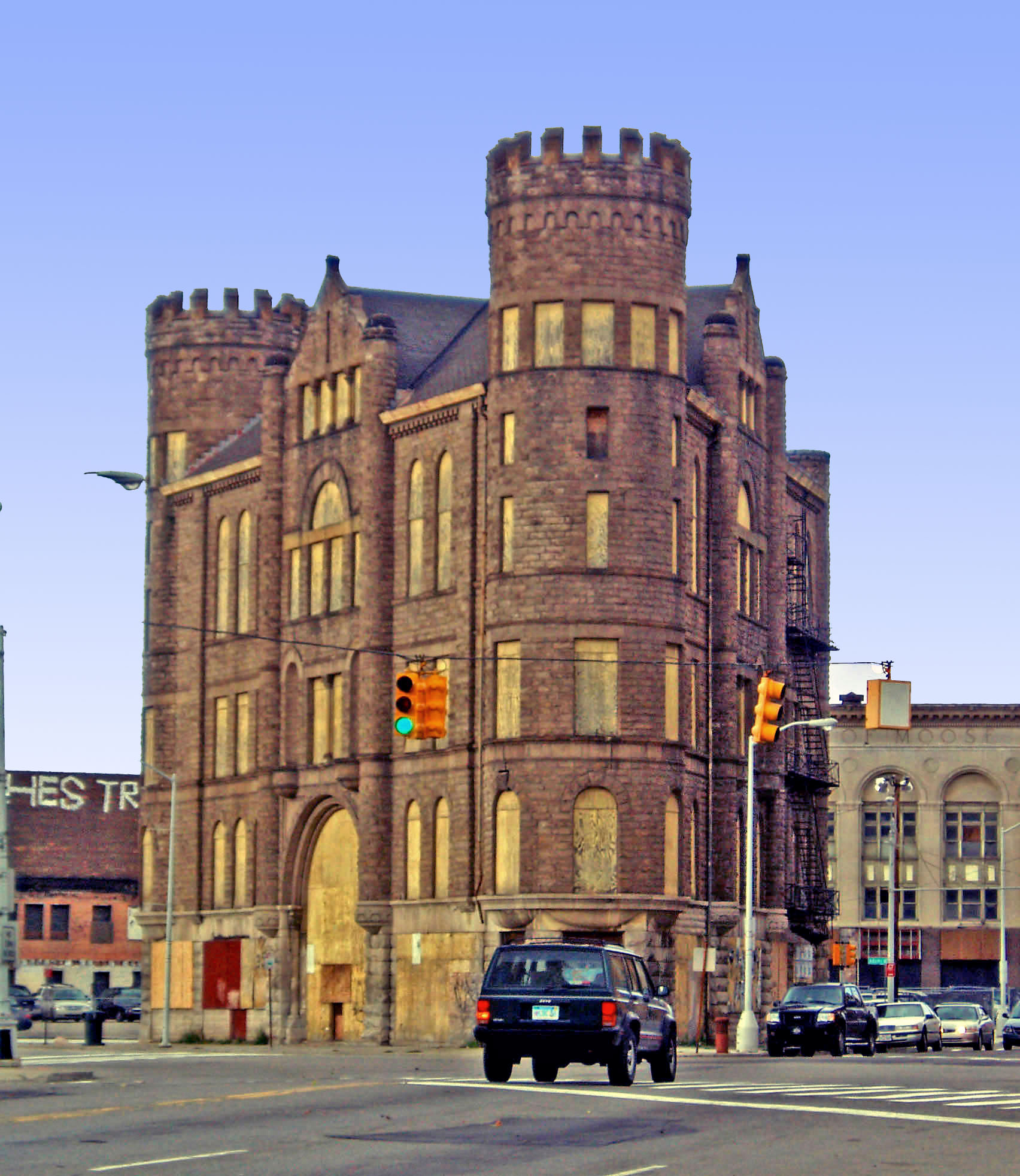
By the 1880s, most northern communities had one or several active GAR posts. There were four in Detroit. Quite often they would successfully convince local governments to erect monuments commemorating the Union forces and then build a meeting hall for the GAR. GAR posts in Detroit pressured the city’s government to build an appropriate structure. This is the one you see at West Grand River and Cass. The cost was $44,000. Local GAR posts paid $6,000, while the city government paid the rest. In 1887, when this massive building was constructed, a market occupied this prime location. Those who sold goods on that location pressured the city’s government to devote the first floor to their markets.
Julian Hess was chosen as the architect and he worked in the Richardson Romanesque style that was popular in their era. You see that he selected a castle-like theme and designed an imposing four-story structure, one that suggests military strength. Two of Hess’s other Detroit designs are equally massive, but done in rather different style: St. Mary’s Parish House on Monroe that the patrons of the Greektown Casino see and Trumbull Avenue Presbyterian which is also in the Richardson Romanesque mode. I believe that Hess died before the GAR hall was complete so Richard Raseman, whose outstanding building in Detroit is the Harmonie Club, completed the design.
The GAR restricted membership to Union Army veterans, so their rolls declined rapidly in the Twentieth Century. Michigan’s last Civil War soldier died in 1951. By the 1930s, the GAR ceased using this building and the city began renting it out. In 1943, the Department of Parks and Recreation took over the space, but by 1973, it became a vacant building as the city's fiscal situation began its slide into bankruptcy. In the first decade of the new century, Illich family business obtained an option from the city to buy the structure but they did not exercise that option. In November, 2011; Tom and David Carleton and Sean Emery from the suburbs announced that they purchased the GAR Building from the city for $220,000. They intend to remodel the upper two floors for their media firm. The ground floor will be used for retail businesses and a restaurant. In the summer of 2014, the new owners announced that two restaurants would open on the street level of the GAR Building at some point in that year. It appears that the efforts to save this historic building have been successful. The opening of new restaurants here also symbolized the redevelopment of the west necklace area surrounding donwton Detroit and its historic financial district.
The picture shows a component of the GAR Memorial located on Belle Isle.
Return to Associations and Clubs
Return to City of Detroit Historic Designations